


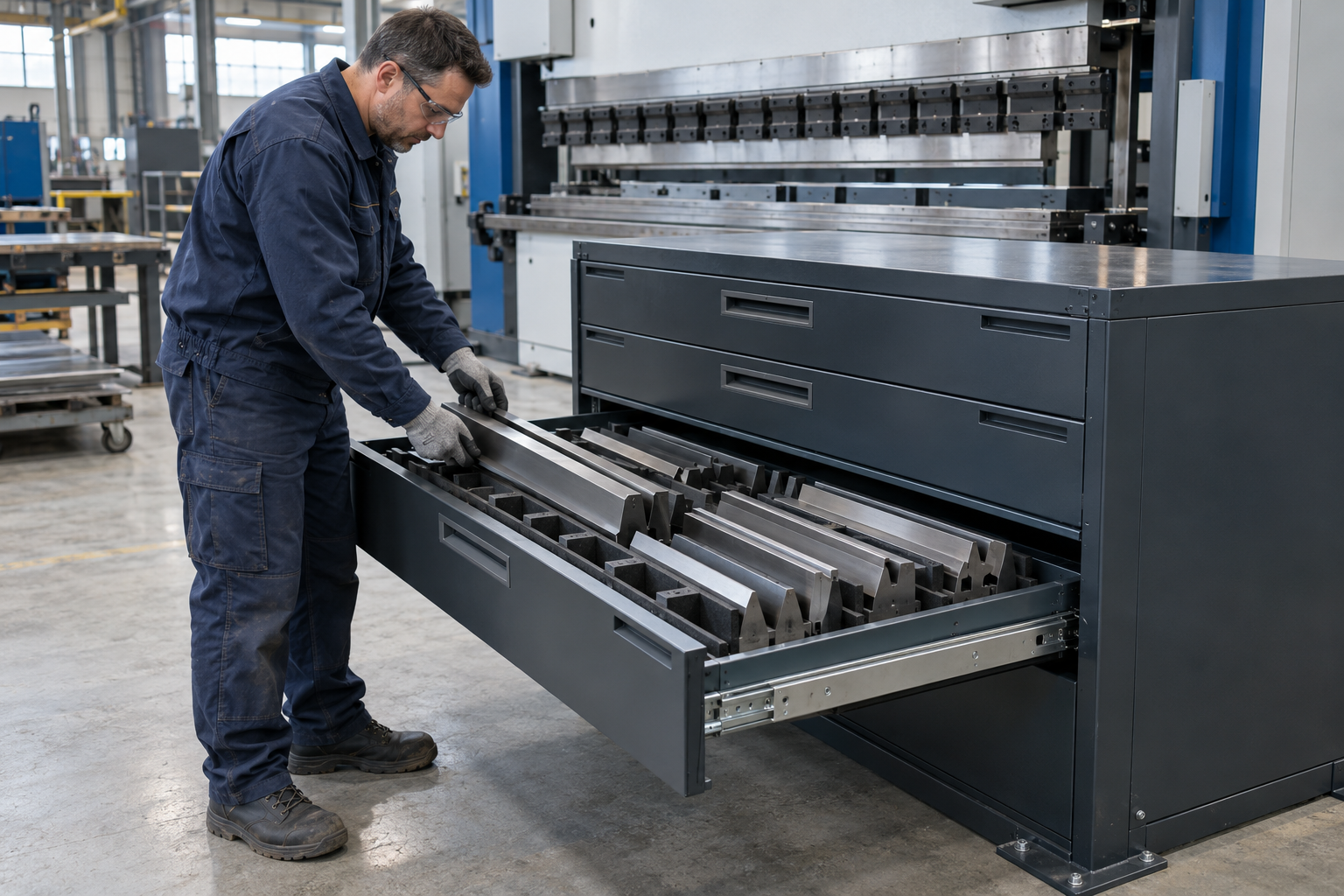
Selecting a cabinet for press brake blades may appear to be a straightforward storage decision, but anyone who has spent time in a busy sheet metal workshop knows that punches, dies, segmented tools, adapters, and special bending profiles require much more care than ordinary hand tools. These long and often heavy precision components influence bend quality, setup accuracy, production speed, and the repeatability of every job performed on the press brake, which means poor storage can affect both employee safety and manufacturing performance. 🏭🔧 I have seen workshops where valuable tooling was placed on wooden pallets, leaned against machine frames, stacked on fixed shelves, or mixed in unlabelled areas, and although these arrangements seemed convenient during a busy shift, they gradually caused searching, unnecessary lifting, surface damage, missing segments, and confusion during production changes. A properly selected cabinet from Detay Industry gives each tool a controlled location, protects precision surfaces, uses workshop space effectively, and helps operators prepare the next bending job with greater confidence.
Understand Why Press Brake Blades Need Specialized Storage
Press brake tooling should not be treated like general steel stock because punches and dies contain carefully manufactured working surfaces, radii, shoulders, clamping areas, and profiles that must remain clean and undamaged. Direct contact between tools can create scratches, dents, corrosion points, or damaged edges, while uncontrolled stacking may make shorter segments difficult to locate and expose employees to falling or shifting components. Dedicated vertical drawer cabinets provide separate supports or compartments that keep the tooling upright, visible, and accessible without allowing every blade to rest against the next one. The official information for a vertical drawer style press brake blade cabinet illustrates how specialized storage can combine compact dimensions with separated tooling positions, while manufacturers such as TRUMPF also emphasize organized tool access, reduced searching, protection, and improved setup preparation as important elements of professional bending operations.
I like to compare the cabinet to a carefully indexed library, because a library does not protect its collection by piling every book in one corner; it assigns each item a clear position, keeps related materials together, and allows the user to retrieve what is needed without disturbing everything else. 📚 A properly configured drawer rack system follows the same principle, although a press brake blade cabinet requires supports specifically designed for long punches and dies rather than the flat platforms normally associated with other industrial assets.
Create a Complete Tooling Inventory Before Choosing the Cabinet
The safest cabinet selection process begins with a complete tooling inventory rather than the external dimensions of an empty corner in the workshop. I recommend recording every punch, die, adapter, holder, segmented set, special profile, and accessory, including its manufacturer, tooling standard, total length, individual segment lengths, profile height, width, approximate or verified weight, condition, compatible press brake, and frequency of use. This information allows the cabinet designer to determine the required drawer height, support spacing, compartment width, total capacity, and number of drawers without relying on assumptions. The workshop should also identify future tooling purchases, because selecting a cabinet that fits the current collection perfectly but leaves no expansion capacity can create a new storage problem after the next machine or product is introduced.
The engineering approach used for a heavy mold rack offers a useful lesson here, because the design should always follow verified dimensions, weights, and handling methods. A drawer mold rack carries compact and extremely dense tools on horizontal platforms, while a press brake blade cabinet normally holds long tooling vertically, yet both systems depend on declared capacities, stable supports, suitable anchoring, and controlled drawer movement. The specialists at Detay Industry can use a detailed inventory to develop drawer dimensions and support profiles around the actual tooling collection instead of asking operators to adapt valuable blades to generic compartments.
| Selection Criterion | Questions to Ask | Why It Matters |
|---|---|---|
| Tooling dimensions | What are the length, height, width, and profile shape of every punch and die? | The supports and drawer clearances must fit the tools without harmful contact |
| Tool weight | What is the loaded weight of each drawer after all assigned tooling is added? | The drawer, guides, frame, and anchors must remain within their declared capacities |
| Frequency of use | Which tools are used daily, weekly, occasionally, or only for special orders? | Frequently used tools should occupy the most practical access positions |
| Handling method | Will operators lift the tools manually or use a transfer cart, lifting device, or crane? | The cabinet position and drawer access must support the approved handling method |
| Tooling condition | How will damaged, dirty, or inspection pending tools be separated? | Production ready tooling should not become mixed with tools awaiting maintenance |
| Available space | Is there enough room for the cabinet, open drawers, operators, and passing materials? | The storage system must not obstruct machine operation or workshop traffic |
| Future capacity | Will new presses, profiles, or tooling standards be introduced? | Expansion allowance can prevent overcrowding and unsafe improvised storage |

Check Drawer Load Capacity and Cabinet Stability
A vertical drawer may contain many metres of hardened steel, so the workshop must calculate the loaded weight of every drawer rather than judging capacity by how much physical space remains. A drawer that still has several empty compartments may already be close to its permitted load if it contains large dies or tall punches. The cabinet should display durable capacity information, and the tooling location plan should prevent employees from moving several heavy tools into a drawer that was originally assigned to lighter profiles. The Occupational Safety and Health Administration guidance on storage systems emphasizes stable storage, visible capacity limits, rack inspection, clear aisles, and the prompt isolation of damaged structures, all of which provide useful principles for sheet metal tooling cabinets.
The cabinet also needs a level and structurally suitable floor, appropriate base plates, and the anchoring method specified by the manufacturer or project engineer. Opening a loaded vertical drawer moves weight away from the main frame and changes the forces transferred to the cabinet and floor, so operators should never treat anchoring as an optional detail. The structural thinking applied to an injection rack remains relevant because any moving industrial storage level must control its load throughout the complete opening and closing cycle. Drawer stops, closed position locks, handles, guides, and any one drawer operation mechanism should remain functional under the maximum approved load, not merely when the cabinet is empty.
Plan Safe and Ergonomic Tool Access
Press brake blades may be long, dense, sharp edged, slippery, and awkward to grip, so safe storage should reduce bending, twisting, reaching, and unnecessary carrying. The Health and Safety Executive manual handling guidance recommends avoiding hazardous handling where reasonably possible, assessing tasks that remain, and using suitable aids or workplace changes to reduce risk, while OSHA ergonomics guidance highlights the value of fitting work to the person and controlling awkward postures, high force, and repetitive movement. In practical terms, frequently used tooling should sit at accessible heights when its weight and the cabinet design permit, while exceptionally heavy or awkward blades should be assigned to lower compartments or moved with a suitable mechanical handling device.
Operators should have enough room to stand in a stable position, open the selected drawer, inspect the tooling, establish a secure grip, and transfer it without colliding with another employee, a sheet cart, a pallet, or the press brake itself. A nearby industrial table can provide a controlled surface for checking short segments, adapters, setup documents, and measurement records, while an appropriately selected workbench can hold approved cleaning products, gloves, gauges, and maintenance equipment. These supporting stations prevent operators from placing loose tools on open drawers, machine surfaces, or the floor, where they could fall, become contaminated, or obstruct movement.
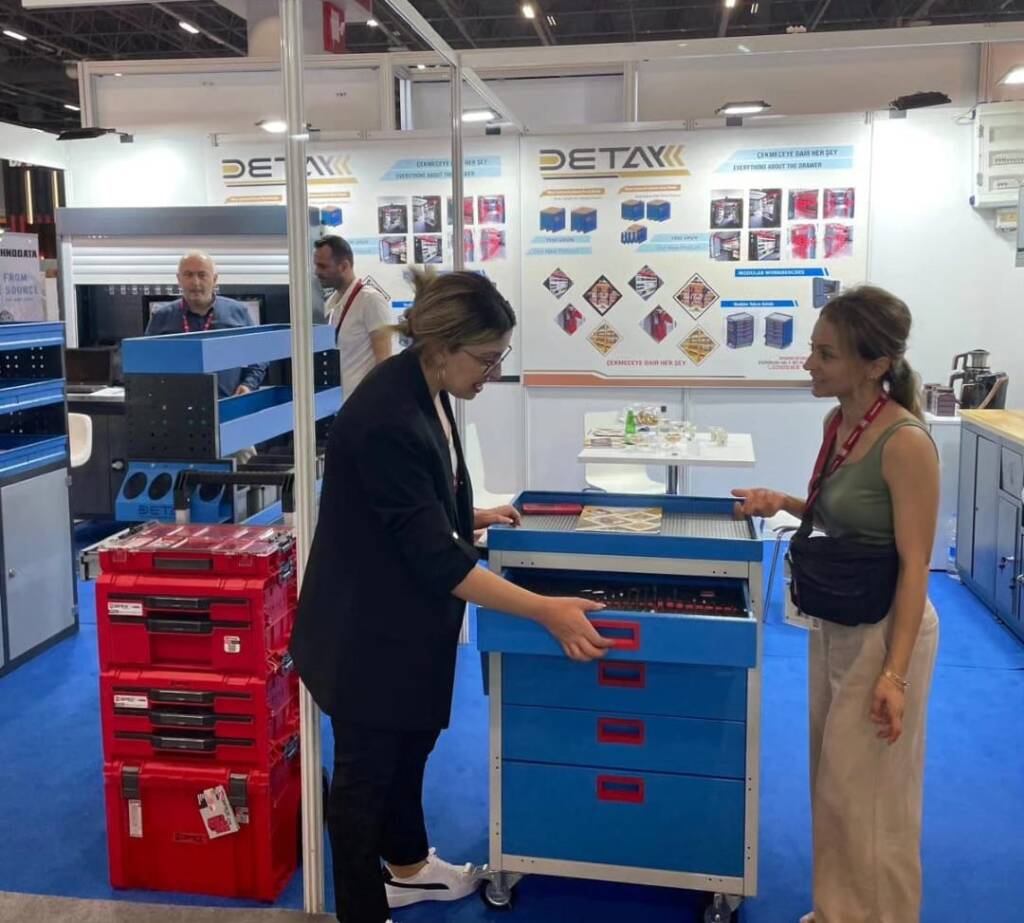
Protect the Working Profiles and Clamping Surfaces
The cabinet supports should hold punches and dies at stable contact points that do not damage their functional surfaces. The required shape differs according to the tooling standard, profile geometry, height, width, segment length, and center of gravity, so a narrow punch, wide V die, offset tool, hemming tool, and special forming profile may each need a different retaining arrangement. Operators should not force an incompatible profile into a compartment merely because the drawer contains empty space, because unsuitable supports can allow the tool to lean, slide, rotate, or place concentrated pressure on a delicate edge.
The workshop should also consider dust, grinding particles, moisture, oil, welding residue, and cleaning practices when deciding between an open, partially enclosed, or enclosed cabinet design. Tools should be visually inspected and cleaned with approved products before returning to storage, while damaged or questionable tooling should enter a clearly marked inspection area instead of returning to a production ready drawer. This process can form part of the wider rack systems strategy in the workshop, where each asset receives a defined location and condition status rather than relying on personal memory or temporary floor storage. 🧼✅
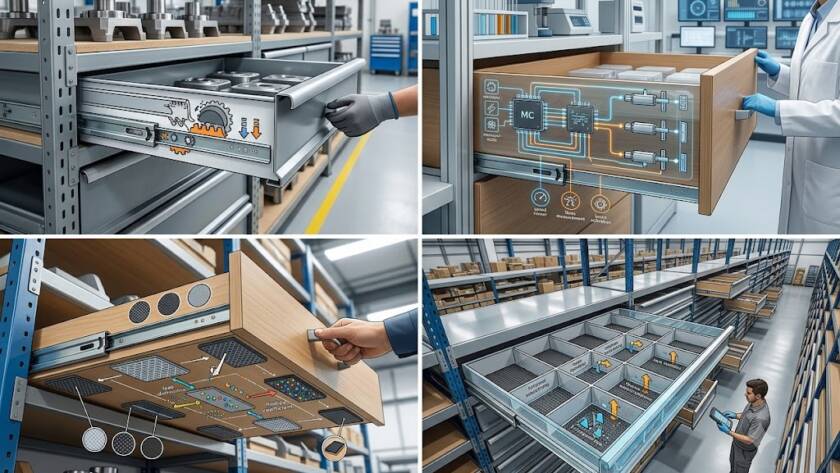
Evaluate Drawer Locks, Stops, and Anti-Tilt Features
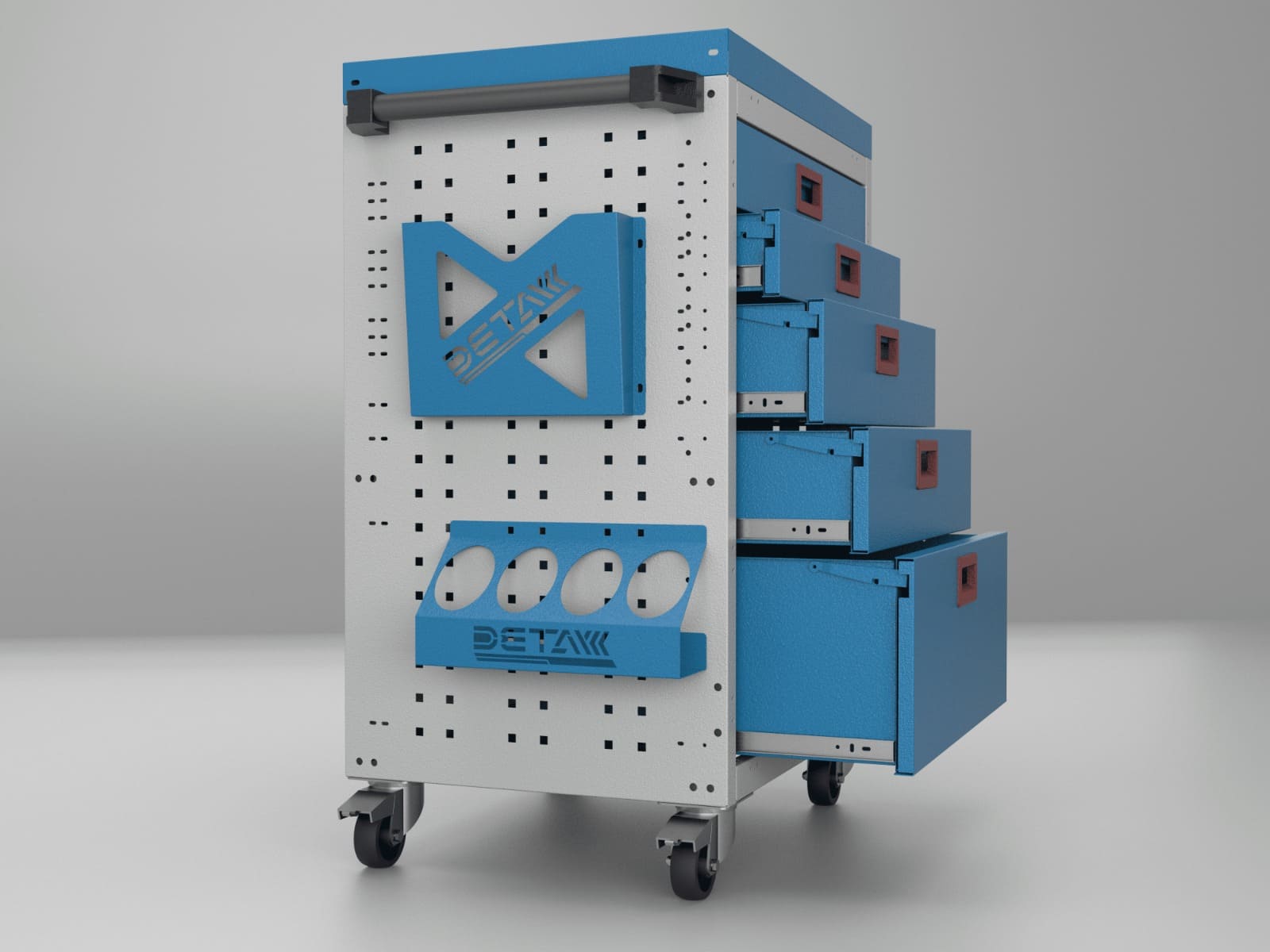
A cabinet containing several heavily loaded vertical drawers should include controls that prevent unintended movement. Each drawer should remain securely closed when not in use, provide a dependable end stop, and move smoothly without excessive play or sudden release. Where the design includes an interlock that permits only one drawer to open at a time, employees should never bypass or modify it, because opening several loaded drawers can move too much weight forward and reduce cabinet stability. Handles should allow operators to control the drawer without placing their fingers near pinch points, and the opening force should remain reasonable under normal approved loading.
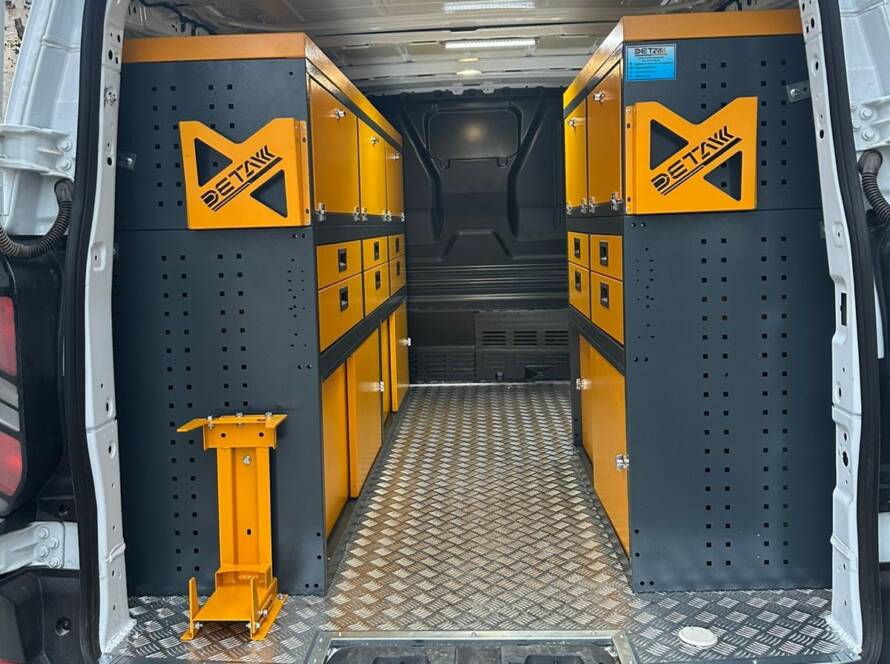
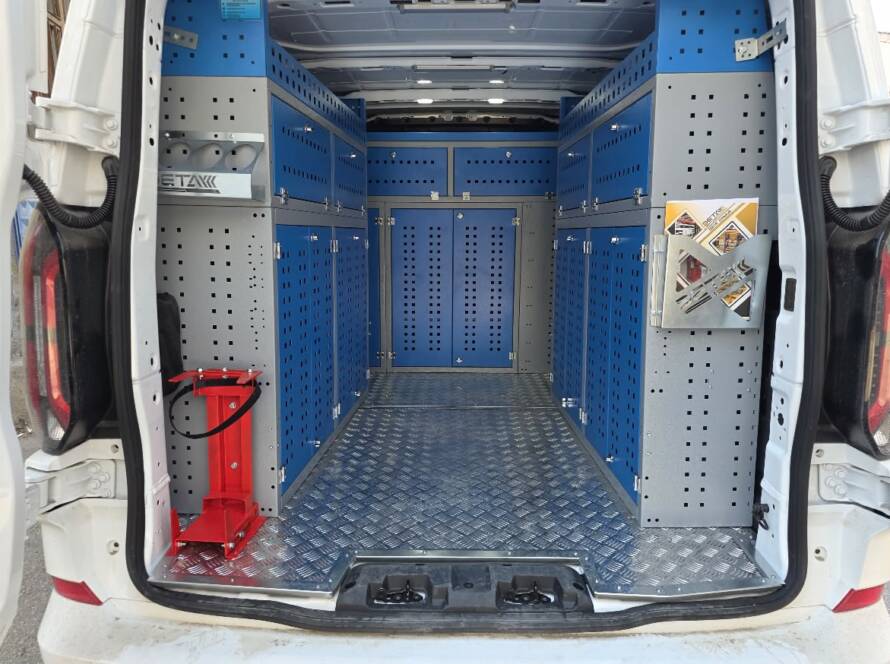
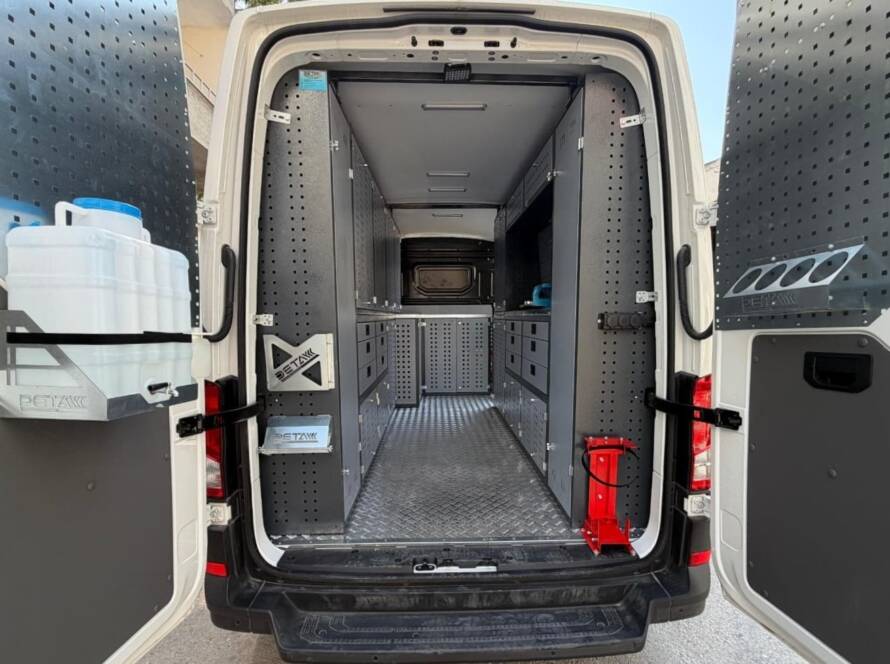
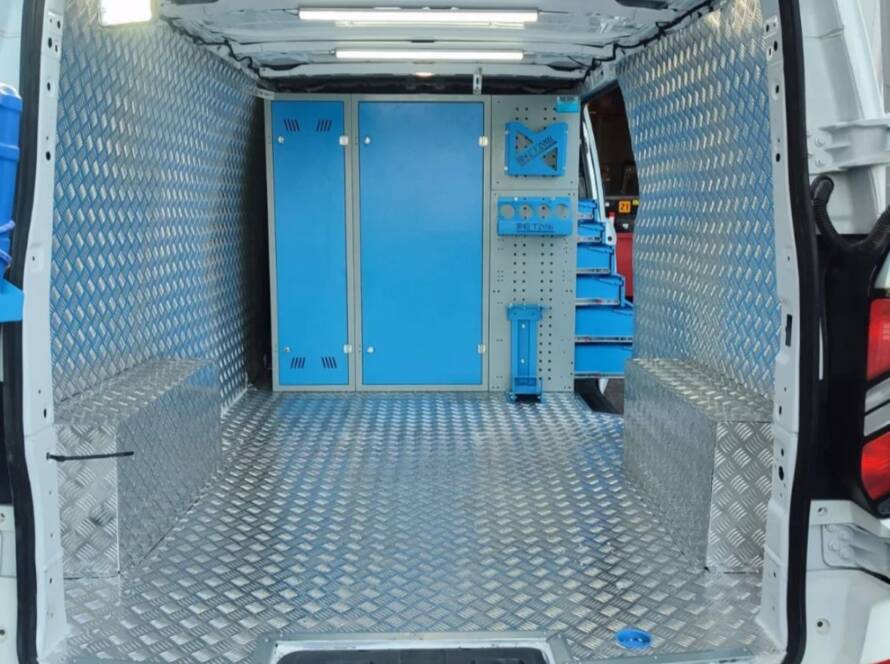
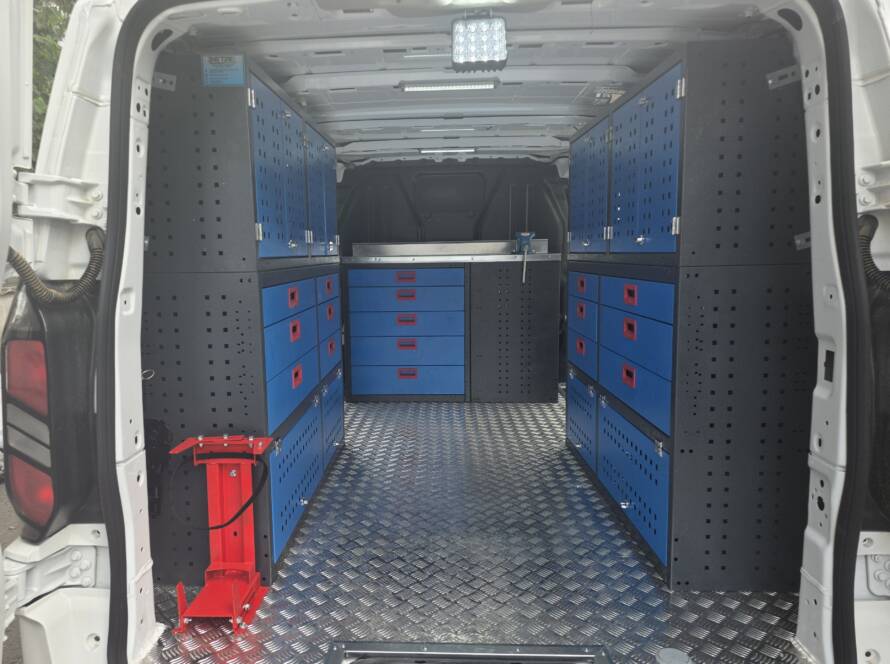
When I compare this stationary cabinet with an in-vehicle tool cabinet, the environments are clearly different, but both solutions demonstrate why positive locking and controlled movement matter. Vehicle drawers must remain closed during braking and cornering, while workshop drawers must remain stable during opening, loading, and daily use. The cabinet selected with Detay Industry should therefore be evaluated as a complete working system that includes the frame, drawer, supports, locks, floor connection, tooling load, and operator movement rather than as a collection of separate metal components.
Position the Cabinet According to the Press Brake Workflow
The cabinet should be close enough to reduce unnecessary walking but far enough from the press brake to preserve the machine’s operating area, sheet movement, maintenance access, emergency routes, and safe transfer space. The drawer opening zone should remain clear of pallets, scrap containers, sheet carts, packaging, and finished components, while pedestrian and forklift routes should not pass directly through the tooling transfer area whenever a safer layout is reasonably possible. Lighting should allow operators to read profile labels and inspect working surfaces, and the floor should provide a stable, clean, and slip resistant working area.
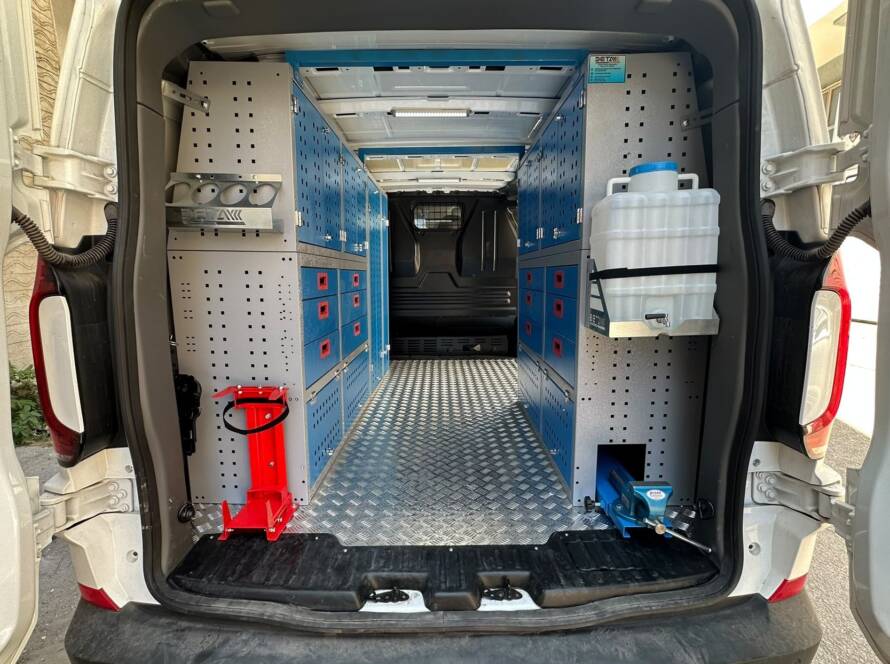
The modular planning logic found in an in-vehicle cabinet system offers a useful organizational comparison, because storage performs best when it follows the sequence of the user’s work. Similarly, an in-vehicle equipment rack assigns tools according to access frequency, weight, and purpose, even though a press brake blade cabinet requires completely different structural calculations and stationary anchoring. The common lesson is simple: the cabinet should support the workflow instead of forcing employees to make extra journeys or awkward movements around it.
A Practical Cabinet Selection Example
Imagine a sheet metal workshop operating two press brakes and storing approximately seventy upper punches, lower dies, short segments, adapters, and several special forming tools. The commonly used punches and V dies currently sit on horizontal racks near the machines, while special profiles remain on pallets at the rear of the workshop. Operators regularly walk between several locations, short tooling segments become mixed, and damaged tools sometimes return to the same storage area as production ready tooling.
I would begin by measuring and recording every tool, grouping compatible profiles, calculating the expected drawer loads, and identifying the tooling used most frequently. The proposed cabinet would contain separate vertical drawers for common punches, dies, segmented tooling, adapters, and special profiles, with shaped supports selected for each group. Frequently used tooling would occupy accessible positions, heavy profiles would remain at practical lower levels, and damaged or inspection pending tools would receive an independent clearly marked compartment. Each drawer would display its identification code, capacity, tooling family, and profile image, while the press brake setup sheet would state the exact cabinet and drawer location required for the next job.
Before final production, operators would test a full size layout using representative tooling while wearing their normal gloves and protective equipment. They would open each drawer, remove long and short sections, transfer the tools toward the press brake, return them to the assigned supports, and report uncomfortable reaches or conflicts with nearby equipment. This practical test would allow Detay Industry to refine handle positions, support spacing, drawer height, opening clearances, and cabinet placement according to real employee movement rather than assumptions. The result would feel less like a storage box and more like a reliable assistant that quietly prepares the workshop for every bending change. 😊📋
Establish Inspection, Cleaning, and Training Procedures
A safe cabinet requires planned inspection throughout its working life because anchors, frames, drawer guides, handles, locks, supports, stops, and labels experience repeated use. Operators should complete a simple visual check before opening a drawer, looking for leaning tools, incorrect positions, overloaded compartments, loose supports, unusual drawer resistance, structural distortion, corrosion, missing labels, and anything blocking the movement area. A competent person should perform more detailed inspections at intervals determined by the manufacturer, workshop risk assessment, tool weights, frequency of use, and applicable workplace requirements.
The workshop should never drill additional holes, weld new supports, increase drawer capacity, alter the anchoring arrangement, or replace safety components with unapproved alternatives without an engineering review. Training should cover drawer capacities, correct tool orientation, one drawer operation where required, manual handling limits, use of transfer aids, pinch points, protective gloves, housekeeping, damaged tool isolation, and defect reporting. Periodic inventory reviews should also remove obsolete tooling and confirm that every blade remains in its assigned position, because even the strongest cabinet cannot protect tools that employees leave beside the machine after production.
Conclusion
Selecting a tool cabinet for press brake blades requires a detailed evaluation of tooling dimensions, loaded drawer weights, working profiles, support geometry, access frequency, manual handling, cabinet stability, available floor space, and the workshop’s complete bending workflow. A well designed vertical drawer cabinet protects precision surfaces, separates tooling families, reduces searching, supports faster changeovers, improves inventory visibility, and keeps long blades away from uncontrolled floor or pallet storage. 🌟 The benefits remain dependable only when the workshop respects capacity labels, uses suitable supports, keeps drawer paths clear, operates the locking and anti-tilt features correctly, inspects the structure regularly, and trains every operator who handles the tooling. With a cabinet developed from real tool data and practical user feedback, Detay Industry can help sheet metal manufacturers create a safer and more organized storage area where valuable press brake blades remain protected, visible, and ready for the next production order.

